Webflow
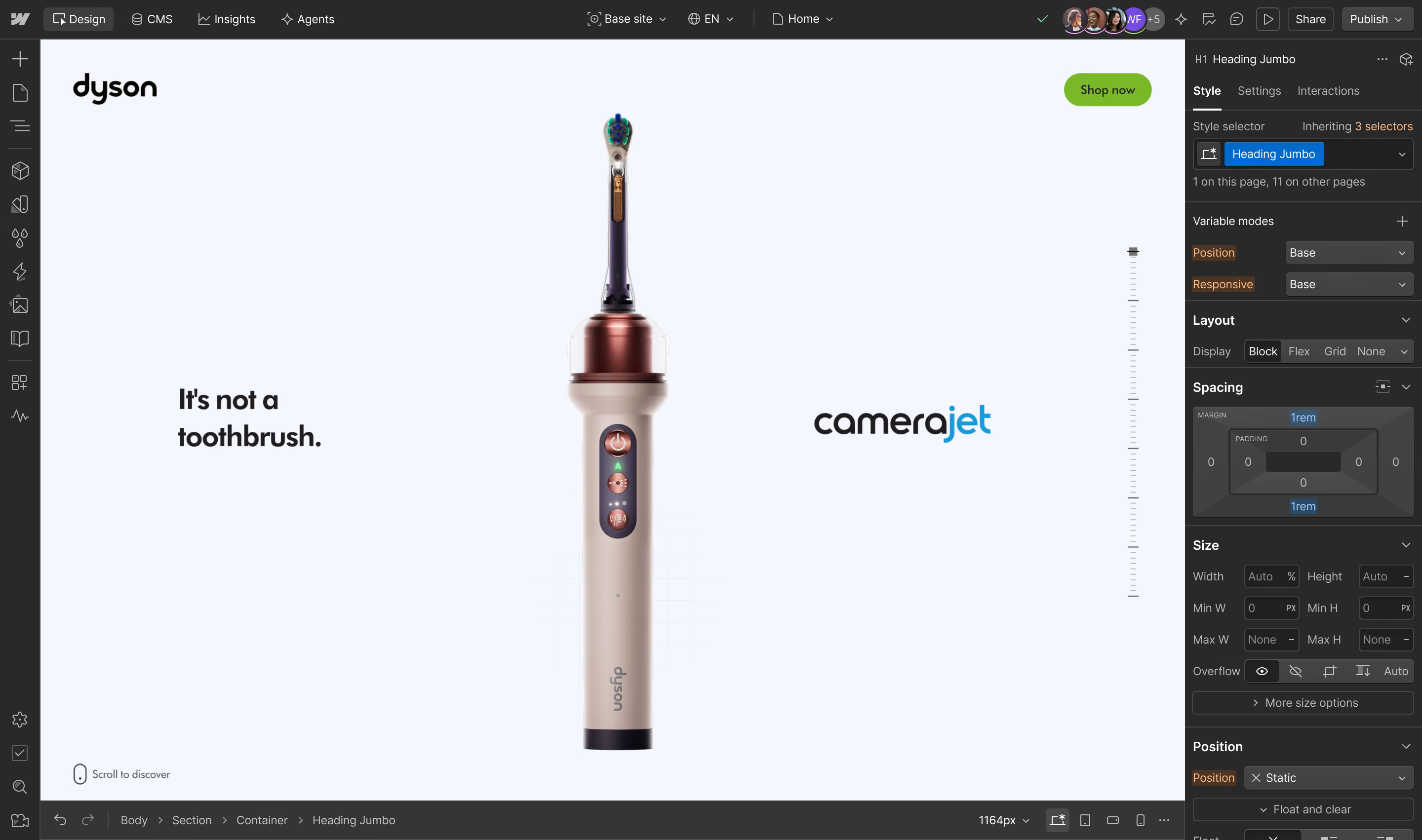
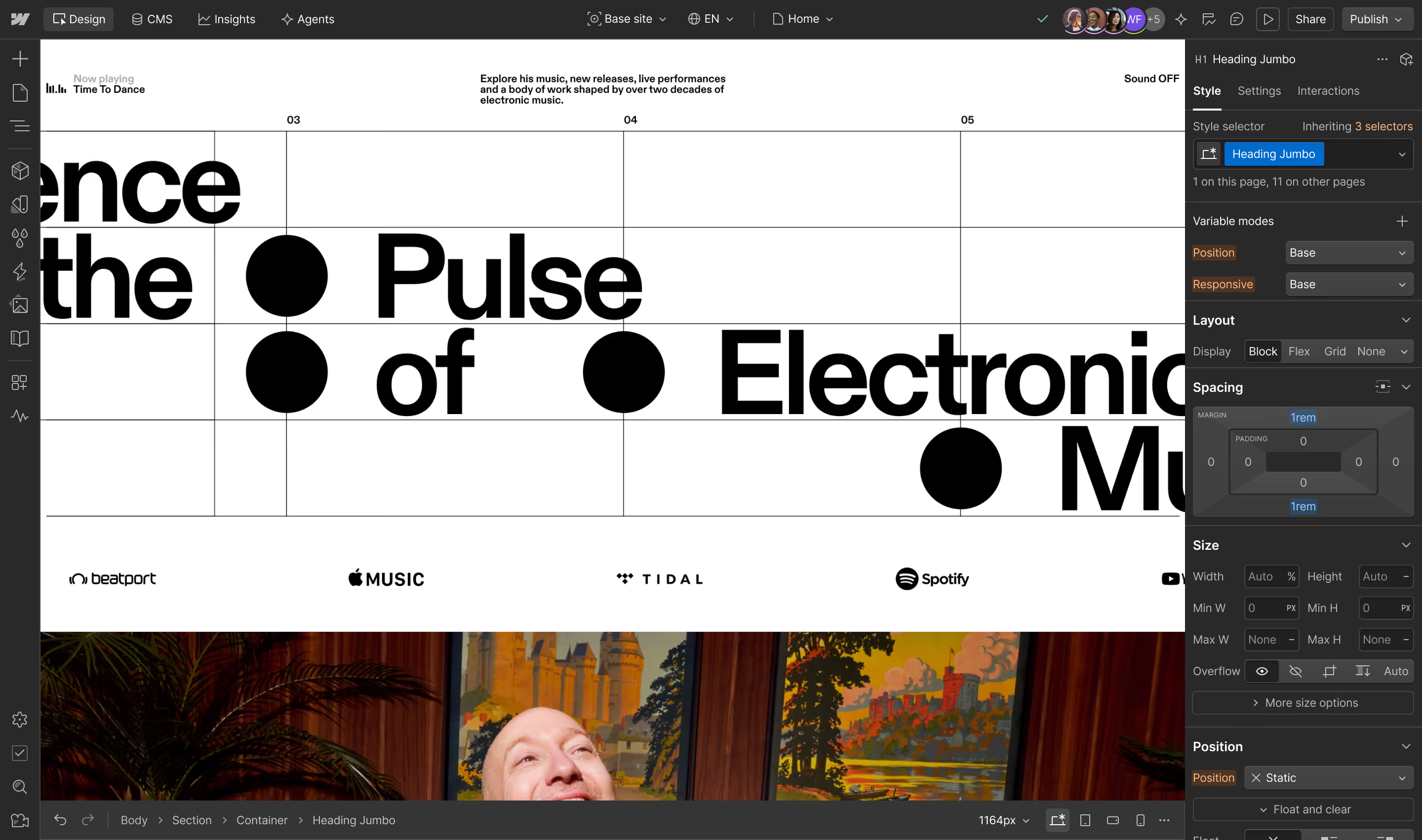
Webflow is a website platform integrating visual web building, content management, and hosting, targeted at designers, marketing teams, developers, and agencies. You can start from a blank canvas, templates, or AI-generated websites, adjust layouts and typography directly in the browser, and let teams manage content and publishing schedules, making it suitable for brand and marketing websites that require continuous updates.
Product screenshots
About Webflow
Webflow is a website platform integrating visual web building, content management, and hosting, targeted at designers, marketing teams, developers, and agencies. You can start from a blank canvas, templates, or AI-generated websites, adjust layouts and typography directly in the browser, and let teams manage content and publishing schedules, making it suitable for brand and marketing websites that require continuous updates.
Beyond website creation, the platform also incorporates built-in analytics, visitor personalization, experimentation testing, and search optimization into a single platform, while tracking brand visibility in AI answers. Teams can maintain brand consistency using shared components and page branches, and expand websites through code components, API integrations, and application deployments, balancing marketing's autonomous updates with development's structural management.
Features
- Visual web building: adjust layouts, typography, and responsive breakpoints on a canvas, starting from a blank site or templates, with Figma import support.
- AI website and content generation: generate multi-page websites using text prompts, alongside page sections, copy, and CMS items.
- Content management and publishing: manage dynamic content and launch timings through the CMS, allowing content staff to edit and publish directly.
- Page template assembly: drag and drop pre-built templates to assemble pages, enabling marketing staff or clients to build new pages within existing site structures.
- Cross-site design resource sharing: share components, variables, and assets, review and accept resource updates, and centrally manage application states across sites.
- Team collaboration and page branching: collaborate in a shared workspace, create branches for static and CMS pages, handle merge conflicts, and track activities, with support for roles and approval workflows.
- Interactivity & Animation: Visualize interactive effects using GSAP, adjust according to breakpoints, and adapt to reduced motion requirements.
- Website Hosting & Protection: Provides global content delivery, DDoS, and bot protection without requiring manual server updates and capacity planning.
- Search & AI Answer Optimization: Supports SEO and AEO, reviews AI site crawling, and tracks brand visibility in AI answers.
- Website Behavior Analysis: Built-in analytics tools to help understand visitor behavior as a basis for improving website conversions and AI visibility.
- Experimentation & Personalization: Run A/B tests, test multiple variables simultaneously with AI, and deliver personalized experiences to different visitors.
- Code Components & Website Export: Import React components or generate components with AI, share them across websites, and support exporting websites to HTML, CSS, and JavaScript.
- External Tools & Agent Integration: Connect existing tools via APIs, event notifications, and MCP, allowing tools like Claude and Cursor to participate in building and website management.
- Full-Stack Application Deployment: Directly host dynamic web applications, connect APIs, custom logic, and real-time data, while utilizing existing website components.
- Multilingual Localization: Provides website localization and multilingual support for teams planning website content in different languages.
- E-Commerce: Supports websites with e-commerce functions, though specific transaction and product management conditions are not listed on the official page.
- Forms & Logic: Provides form processing and logic features, though specific rules and usage limits are not listed on the official page.
- Client Billing Handover: Workspace owners and administrators can transfer the billing of website plans, bandwidth, and add-on services to be paid directly by the client.
Use cases
- Brand Marketing Website Maintenance: Designers build the website structure and shared components, allowing marketing staff to create campaign pages using templates and update content via the CMS.
- Client Website Delivery: After building a website for a client, use page assembly and content management features to let clients maintain it themselves, and hand over website billing to the client for payment.
- Website Conversion Improvement: Combine visitor behavior analysis, A/B testing, and personalized experiences to compare the performance of different content and layouts.
- Existing Product Website Expansion: Developers import React components, connect APIs, and deploy applications requiring custom logic and real-time data on the same platform.
Categories: ,AI Resources, Tool Resources